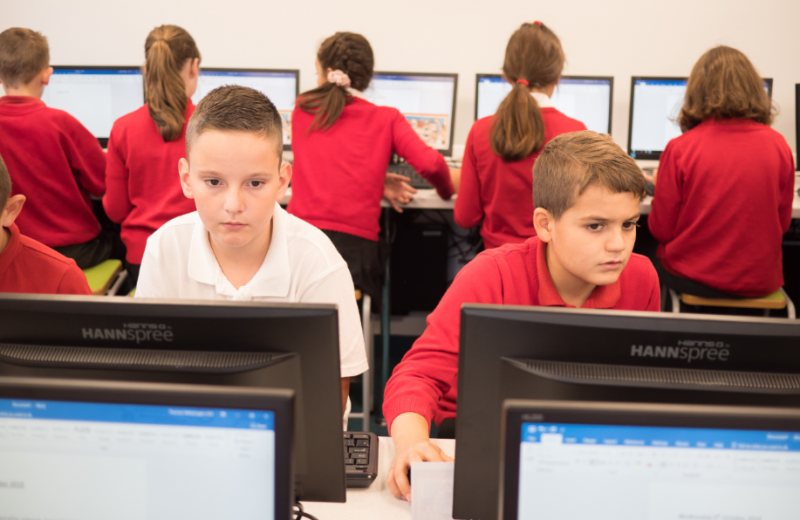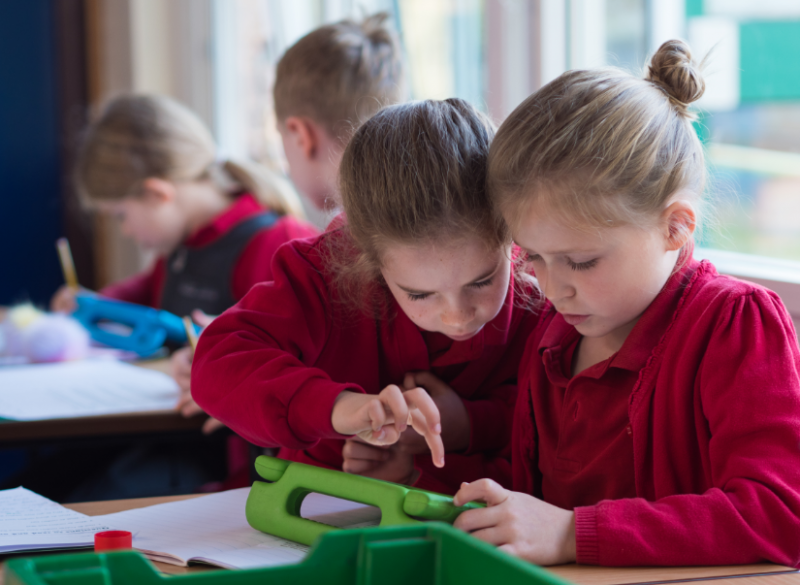
At Harbury, we are all users of online technology at home and at school, and whilst we know the joy and wonder that the internet can provide, we also make sure we know how to stay safe and responsible. We have a strong focus in each Computing lesson on online safety issues, including discussing potential scenarios for all ages. Our children are able to confidently talk about current online safety issues and are encouraged to monitor and report any problems. All of this is facilitated with good communication with home, as we know how important it is for parents and carers to be ‘switched on’ with their children’s online safety.
For more information about Online Safety and how you can support your child please visit this website.
Online safety through theatre
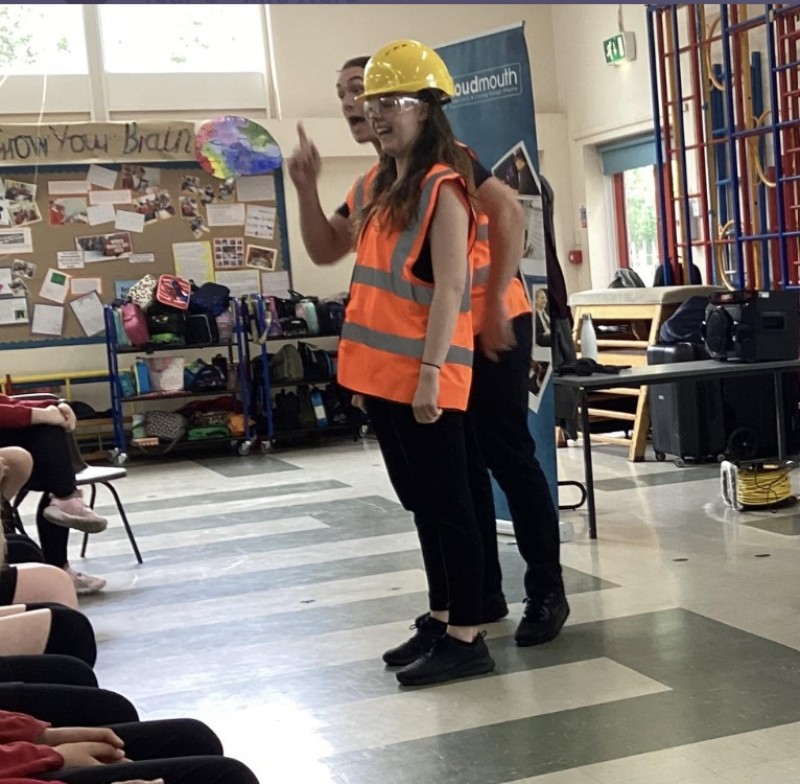
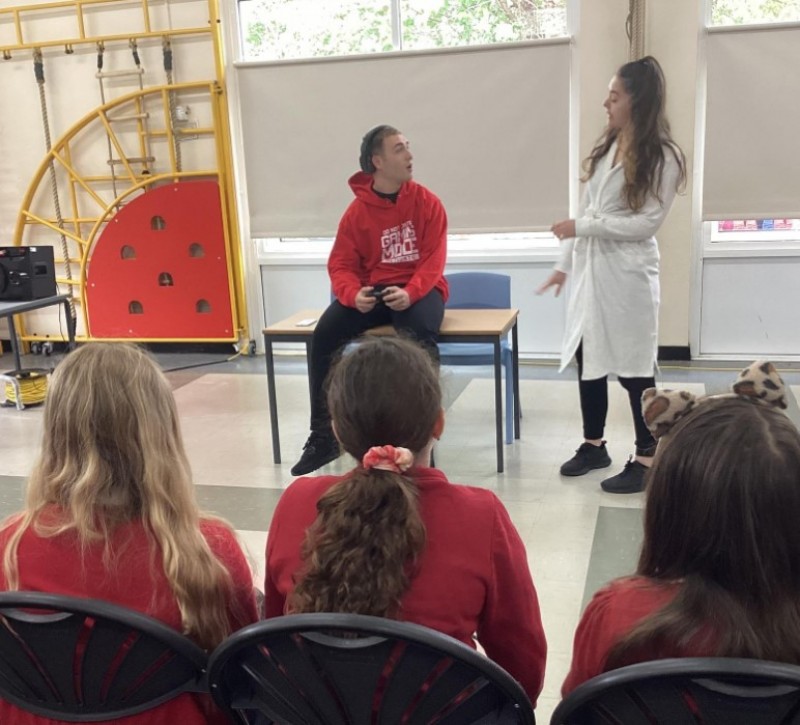
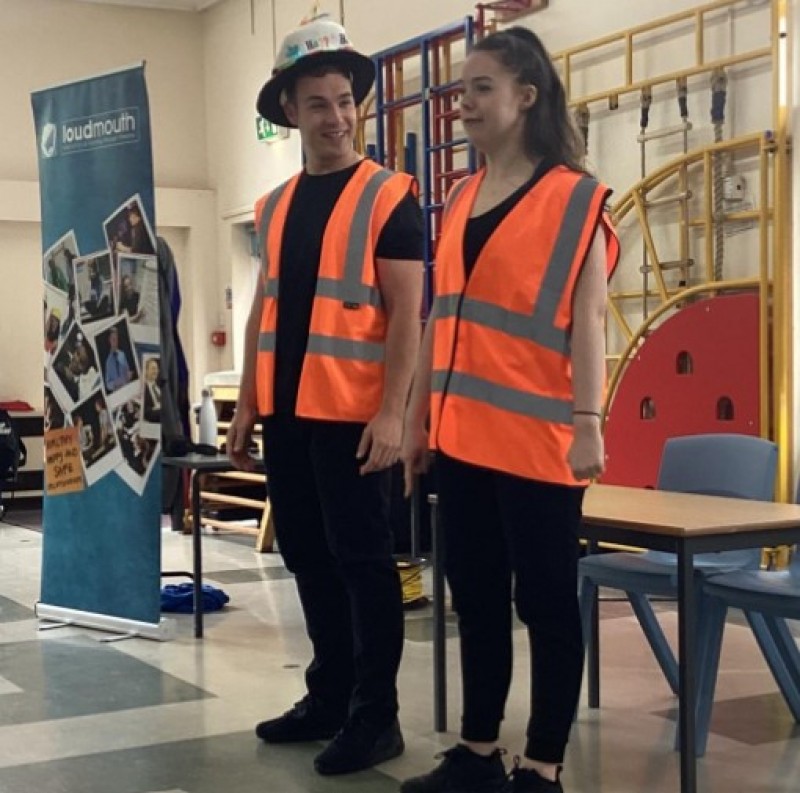
Year 5 and 6 pupils had the privilege to watch the Loudmouth theatre company. The actors presented some relevant and sensitive subject matters in an interesting and emotive way, followed by some group workshops. An excellent way to address online safety and wider safety issues with the children.
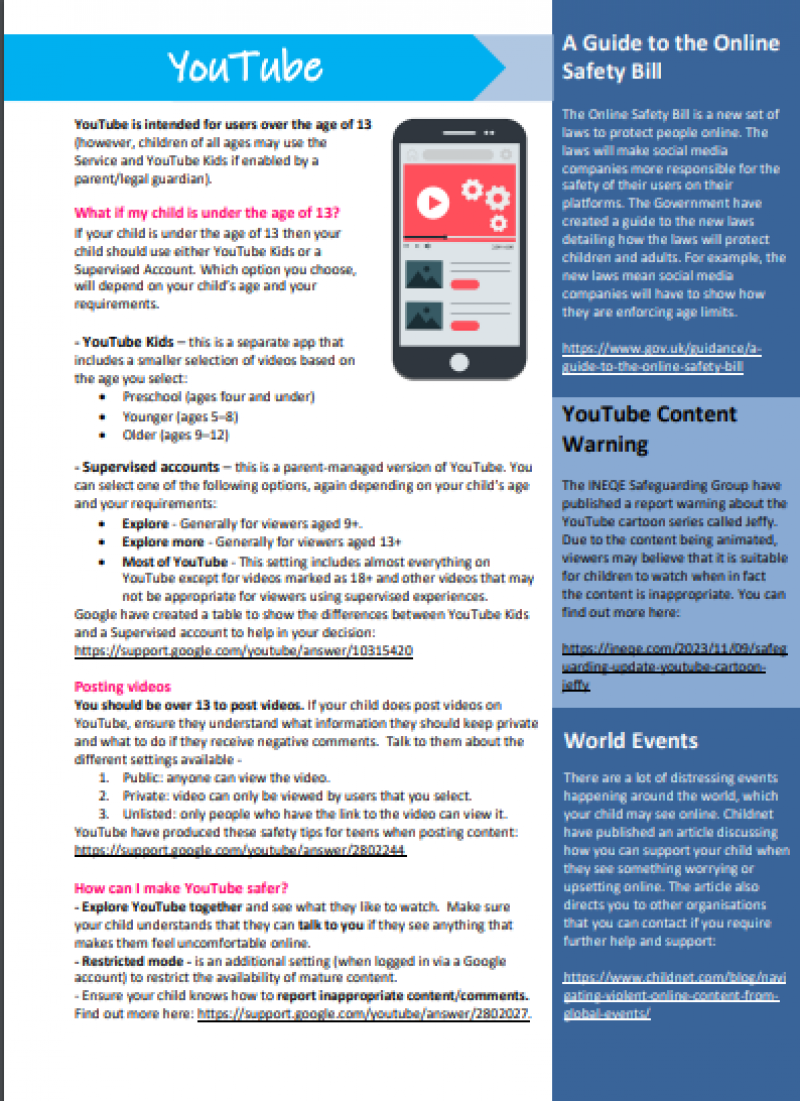
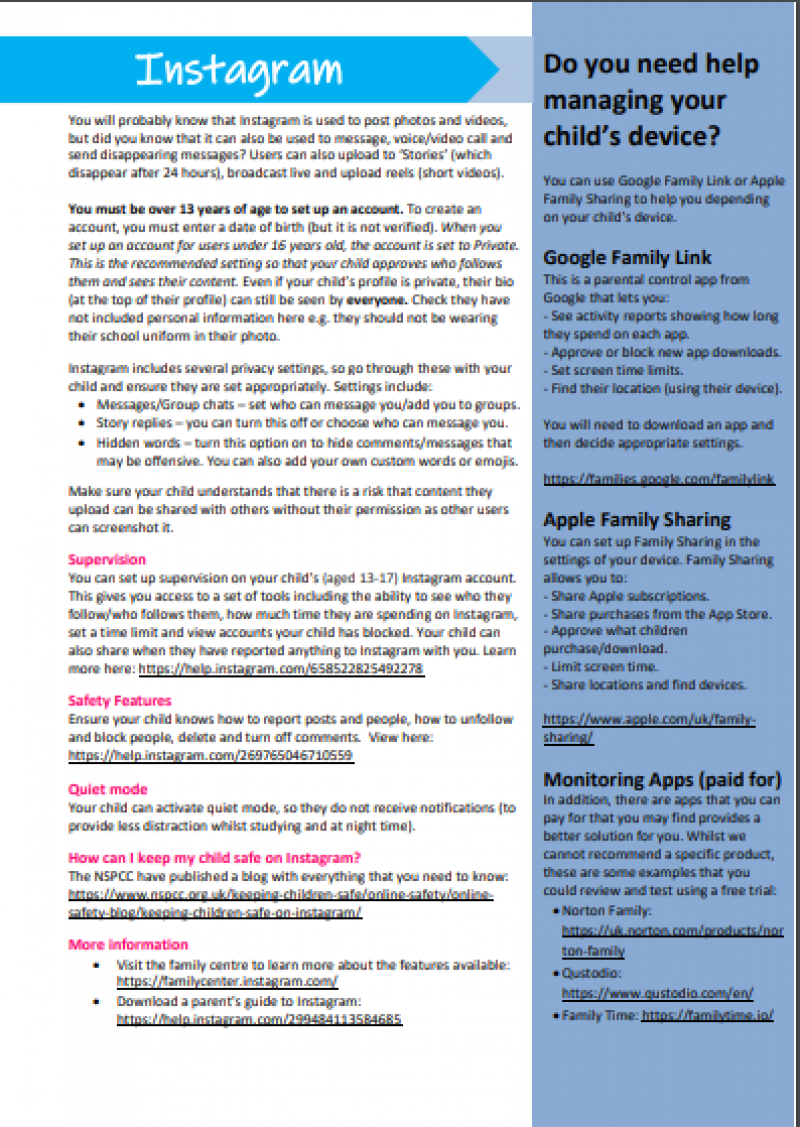
Monthly Online Safety Newsletters
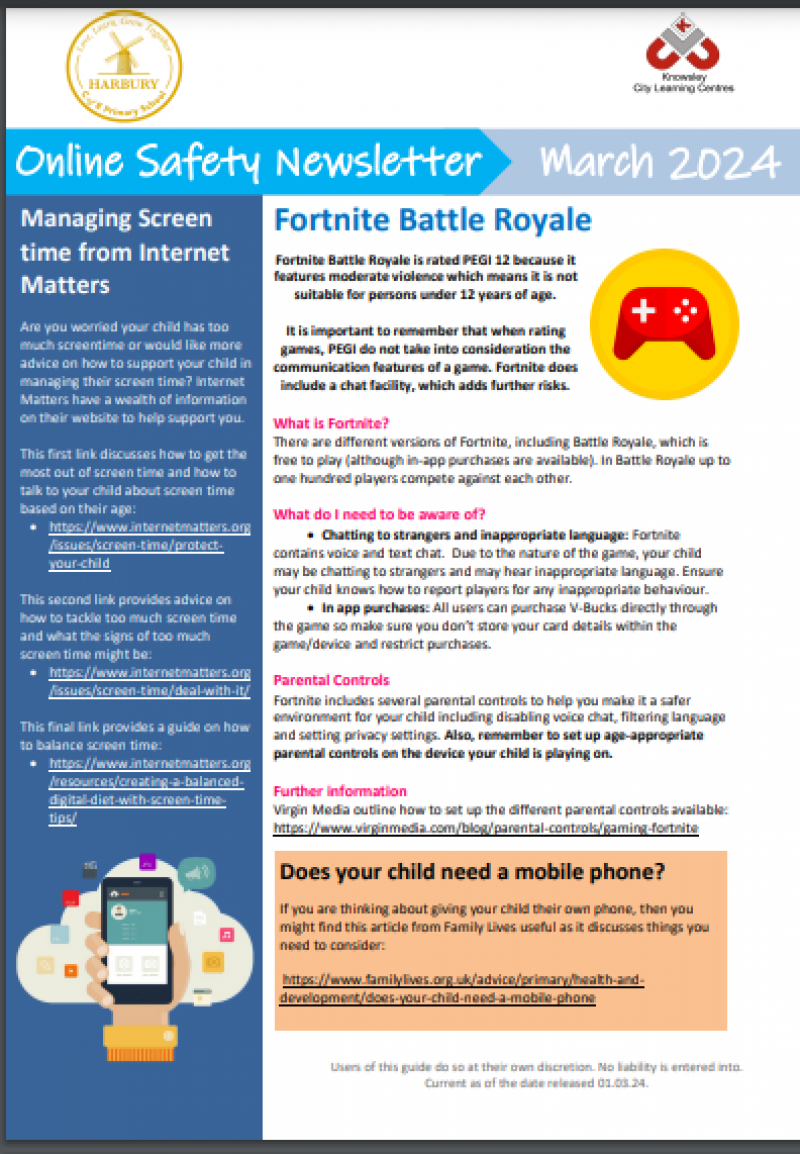
Please see our online safety newsletters below. These are sent out to all our families. We also hold regular online safety parental information sessions through Knowlsey.
Here is some recent feedback from one of our parents regarding the Parental Information Session in January 2024.
"Thanks, the newsletter is great and I thought the online safety webinar this morning was excellent too.
It helped me write a set of "family online safety rules" which have been reviewed by all three children this evening.
All 3 - except the 15 year old - were broadly happy and helped make some improvements too! It stimulated a good conversation with them all too. I learnt a few things. The 15 year old told me about a friend who has been blackmailed online recently. Another showed me his Snapchat use (age 13) to reassure me that it was between friends only and my daughter added a new rule that they should check before watching a movie or series for which they do not meet the recommended age.
Really helpful to create spaces for these conversations with children. Thanks for the schools support with this."
Parent of a child in Year 4
It's never easy to know how to keep our children safe when they aren't with us, and sometimes even when are, if we don't know what's happening in their lives or on their devices! Who are they talking to, what are they doing, are they okay? Don't despair though...go to this website for help and click on the links particular topics like safe settings, sexual harrassment, artifiical intelligence and more.
Harbury Digital Leaders
We are the digital leaders at Harbury Primary School! We were elected by the pupils in our classes to represent computing across the school and promote online safety. We applied for the roles and explained why this was a passion of ours, and once elected our first task was promoting online safety during Online Safety Week in Spring term.
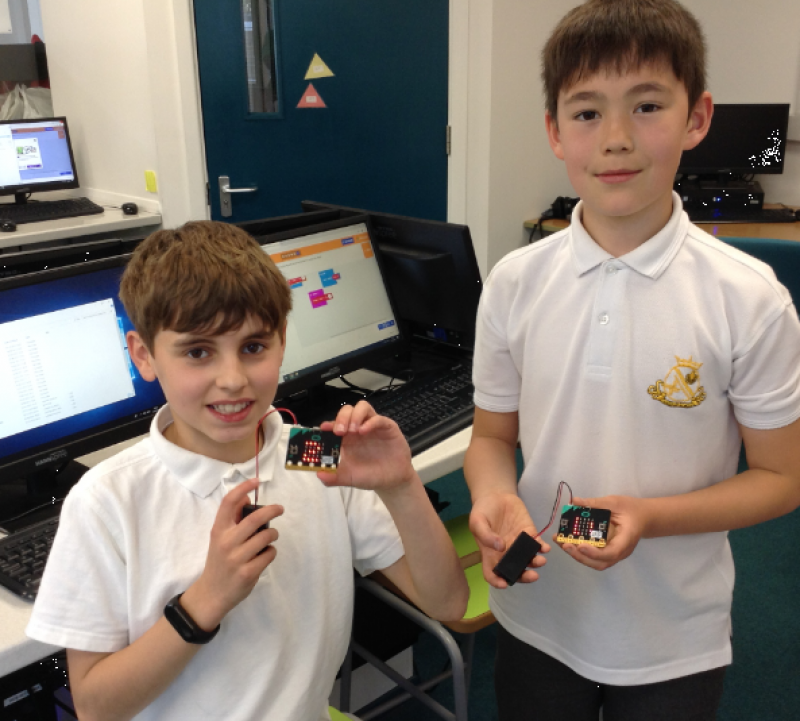
Since then we have been very busy meeting each Monday lunchtime. We have taken part in lots of competitions set by Purple Mash including designing a new Mashcot and a football design to celebrate the men's Euros. We designed and created posters to promote walk to school week, strengthening our computing and word processing skills. We have tried and tested lots of programmes used in classes across the school too such as; Be Internet Legends ahead of online safety week, Scratch, iMovie and Hour of Code. We also went into other classes and helped them to access these. Our final task for the academic year has been to create a set of safety rules when using the hub.
We have all really enjoyed being digital leaders this year, and want to encourage you to apply for next year! Digital leaders has been a fantastic way to make friends, develop our computing skills and promote online safety throughout the school.
SmartPhone Free Childhood
Too Much Screen Time Harms Our Children's Development
Screen time is a term used for activities done in front of a screen, such as watching TV, working on a computer, or playing on a phone or tablet. Screen time is sedentary activity, meaning you are being physically inactive while sitting down and very little energy is used during screen time. Does your child own a smartphone? There is an increasing bank of research available showing the harm that screen time and social media has on our children's development. Pioneering research from New Zealand tracked more than 6,000 children from age two to eight to investigate the impact of breaching the limit for toddlers aged two to five of no more than one hour a day of screen time. This is the maximum recommended by the World Health Organisation, but most British children aged just two spend more than two hours a day watching TV, playing on computers or using a phone/tablet. One in five already owns a smartphone by the age of two, according to the online regulator Ofcom, which is a horrifying statistic.
The research clearly showed that children who have more than 90 minutes screen time (any screens, including watching TV) were, by the ages of 4.5 years and eight, below average for vocabulary, communication, writing, numeracy, and letter fluency.
They also had poorer social skills and higher levels of “peer problems.” These were defined as being more likely to play alone, less liked by other children, less considerate and less likely to share their toys. The research showed that the longer children spent on a screen the worse they became at being able to manage emotions and to interact successfully with others. They said that reducing the time children spent watching TV or online could have significant effects on the quality of children’s education and health.
Did any of you recently watch Swiped - The School that banned Smart Phones? First broadcast on Channel 4 in December and now on 4OD, it is a two part documentary featuring Emma and Matt Willis where they challenge Year 8 pupils to completely give up their smartphones for 21 days. The programme highlights a lot of the potential online dangers that children face when they use smartphones. Reviews of the programme call these dangers extremely shocking and frightening, and recommend that parents watch the two episodes to help take an informed approach before they give their child a smartphone before they are 14. Guardian columnist, author and BBC broadcaster Simon Jenkins wrote “If you’ve got children, you need to watch Swiped – and see how sick their phones are making them."
https://www.channel4.com/programmes/swiped-the-school-that-banned- smartphones
Some parents at our school have already signed up for this pledge- to give our children a smartphone free childhood. The organisation Smartphone Free Childhood has a Parent Pact, an agreement to give children brick phones, rather than smartphones until at least the age of 14. You can find out more about Smartphone Free Childhood and sign up for the Pact if you'd like to by going to this link here:
I'd be very interested in setting up a parent and governor working group to look at this further and discuss ideas other schools have used.
Too Much Screen Time Harms Our Children's Development
Screen time is a term used for activities done in front of a screen, such as watching TV, working on a computer, or playing on a phone or tablet. Screen time is sedentary activity, meaning you are being physically inactive while sitting down and very little energy is used during screen time. Does your child own a smartphone? There is an increasing bank of research available showing the harm that screen time and social media has on our children's development. Pioneering research from New Zealand tracked more than 6,000 children from age two to eight to investigate the impact of breaching the limit for toddlers aged two to five of no more than one hour a day of screen time. This is the maximum recommended by the World Health Organisation, but most British children aged just two spend more than two hours a day watching TV, playing on computers or using a phone/tablet. One in five already owns a smartphone by the age of two, according to the online regulator Ofcom, which is a horrifying statistic.
The research clearly showed that children who have more than 90 minutes screen time (any screens, including watching TV) were, by the ages of 4.5 years and eight, below average for vocabulary, communication, writing, numeracy, and letter fluency.
They also had poorer social skills and higher levels of “peer problems.” These were defined as being more likely to play alone, less liked by other children, less considerate and less likely to share their toys. The research showed that the longer children spent on a screen the worse they became at being able to manage emotions and to interact successfully with others. They said that reducing the time children spent watching TV or online could have significant effects on the quality of children’s education and health.
Did any of you recently watch Swiped - The School that banned Smart Phones? First broadcast on Channel 4 in December and now on 4OD, it is a two part documentary featuring Emma and Matt Willis where they challenge Year 8 pupils to completely give up their smartphones for 21 days. The programme highlights a lot of the potential online dangers that children face when they use smartphones. Reviews of the programme call these dangers extremely shocking and frightening, and recommend that parents watch the two episodes to help take an informed approach before they give their child a smartphone before they are 14. Guardian columnist, author and BBC broadcaster Simon Jenkins wrote “If you’ve got children, you need to watch Swiped – and see how sick their phones are making them."
https://www.channel4.com/programmes/swiped-the-school-that-banned- smartphones
Some parents at our school have already signed up for this pledge- to give our children a smartphone free childhood. The organisation Smartphone Free Childhood has a Parent Pact, an agreement to give children brick phones, rather than smartphones until at least the age of 14. You can find out more about Smartphone Free Childhood and sign up for the Pact if you'd like to by going to this link here:
https://smartphonefreechildhood.co.uk/
See how many families have signed up from Harbury CE Primary School here